


What is the Bending Ovality Control of an Industrial Pipe Bender?
In the realm of industrial manufacturing, the bending of pipes is a crucial process with a wide range of applications, from construction and automotive industries to aerospace and beyond. An Industrial Pipe Bender is a vital piece of equipment used to shape pipes into various forms. One of the key factors that determine the quality of the bent pipes is the bending ovality control.
Understanding Bending Ovality
Bending ovality refers to the deviation of the cross - section of a bent pipe from its original circular shape. When a pipe is bent, the outer wall of the bend is stretched, and the inner wall is compressed. This differential stress causes the circular cross - section of the pipe to deform into an oval shape. Ovality is usually expressed as a percentage and is calculated using the formula:
[O = \frac{D_{max}-D_{min}}{D_{nom}}\times100%]
where (O) is the ovality percentage, (D_{max}) is the maximum diameter of the oval cross - section, (D_{min}) is the minimum diameter of the oval cross - section, and (D_{nom}) is the nominal diameter of the pipe.
Excessive ovality can have several negative impacts on the performance and functionality of the bent pipes. For example, in fluid - carrying applications, an oval cross - section can disrupt the flow of the fluid, leading to increased pressure drop, turbulence, and potential erosion of the pipe wall. In structural applications, ovality can reduce the load - bearing capacity of the pipe, making it more susceptible to failure under stress.
Importance of Bending Ovality Control
Controlling bending ovality is essential for ensuring the quality and reliability of bent pipes. By minimizing ovality, manufacturers can meet the strict quality standards required by various industries. In the automotive industry, for instance, precise ovality control is necessary for exhaust systems to ensure proper fitment and efficient exhaust gas flow. In the aerospace industry, where safety is of utmost importance, tight ovality tolerances are crucial for hydraulic and fuel lines to prevent leaks and ensure system integrity.
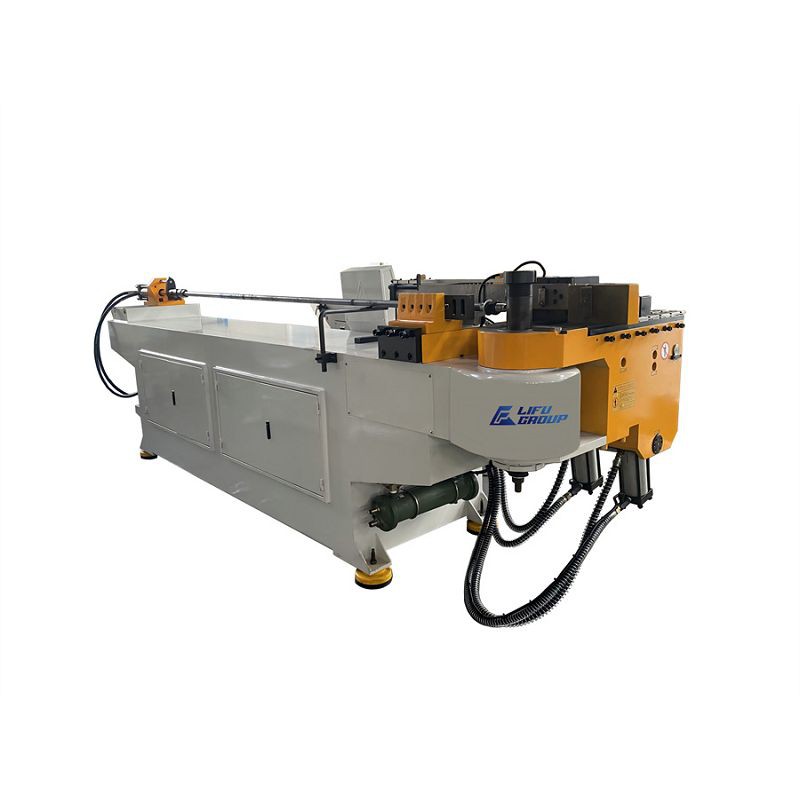

Moreover, good ovality control can also enhance the aesthetic appearance of the bent pipes. In architectural applications, such as handrails and decorative structures, pipes with minimal ovality look more professional and visually appealing.
Factors Affecting Bending Ovality
Several factors can influence the bending ovality of pipes when using an industrial pipe bender. These include:
- Pipe Material: Different materials have different mechanical properties, such as yield strength, ductility, and elasticity. For example, materials with high ductility, like copper and aluminum, are generally more forgiving during the bending process and tend to have lower ovality compared to materials with low ductility, such as stainless steel and carbon steel.
- Pipe Wall Thickness: Thicker - walled pipes are more resistant to ovalization during bending. As the wall thickness increases, the pipe's ability to maintain its circular cross - section improves. However, thicker walls also require more force to bend, which can put additional stress on the pipe bender.
- Bend Radius: The ratio of the bend radius to the pipe diameter (R/D ratio) is a critical factor. A smaller R/D ratio means a tighter bend, which generally results in higher ovality. For example, a 90 - degree bend with a small radius will cause more significant deformation of the pipe cross - section compared to a bend with a larger radius.
- Bending Method: There are several bending methods available, such as roll bending, press bending, and rotary draw bending. Each method has its own characteristics and can affect the ovality differently. Rotary draw bending, for example, is known for its ability to produce bends with relatively low ovality, especially when using proper tooling and techniques.
Techniques for Bending Ovality Control
As an Industrial Pipe Bender supplier, we offer a range of solutions to help our customers control bending ovality effectively.
- Proper Tooling Selection: Using the right tooling is crucial for minimizing ovality. For example, mandrels can be used during the bending process to support the inside of the pipe and prevent excessive deformation. Mandrels come in different shapes and sizes, and selecting the appropriate one based on the pipe diameter, wall thickness, and bend radius is essential. Additionally, the use of high - quality bending dies with precise dimensions can also help reduce ovality.
- Adjusting Bending Parameters: The bending speed, pressure, and clamping force are important parameters that can be adjusted to control ovality. A slower bending speed allows the pipe to deform more gradually, reducing the likelihood of excessive ovalization. Similarly, applying the right amount of pressure and clamping force can ensure that the pipe is held firmly in place during bending without causing unnecessary deformation.
- Advanced Control Systems: Many of our Pipe and Tube Bending Machine models are equipped with advanced numerical control (NC) systems. These systems allow for precise control of the bending process, including the ability to adjust parameters in real - time based on the feedback from sensors. By continuously monitoring and adjusting the bending process, NC systems can help achieve consistent and low - ovality bends.
Quality Assurance and Inspection
To ensure that the bent pipes meet the required ovality standards, quality assurance and inspection are essential. Non - destructive testing methods, such as ultrasonic testing and laser scanning, can be used to measure the ovality of the bent pipes accurately. By regularly inspecting the pipes during and after the bending process, any issues with ovality can be detected early, and corrective actions can be taken.
Conclusion
In conclusion, bending ovality control is a critical aspect of the pipe - bending process. As an Industrial Pipe Bender supplier, we understand the importance of providing our customers with high - quality equipment and solutions to achieve optimal ovality control. Our Pipe and Tube Bending Machine and Bending Machines NC are designed to meet the diverse needs of different industries and ensure precise and reliable pipe bending.
If you are in the market for an industrial pipe bender or need more information about bending ovality control, we encourage you to contact us for a detailed discussion. Our team of experts is ready to assist you in finding the best solution for your specific requirements.
References
- "Pipe Bending Handbook", Industrial Press Inc.
- "Materials Science and Engineering: An Introduction", William D. Callister Jr. and David G. Rethwisch.
- Industry standards and guidelines related to pipe bending and ovality control.