


Hey there! As a supplier of NC pipe bending machines, I've been getting a lot of questions lately about what goes into these nifty pieces of equipment. So, I thought I'd break down the main components of an NC pipe bending machine for you.
1. The Control System
The control system is like the brain of the NC pipe bending machine. It's what allows the machine to operate with precision and repeatability. Most modern NC pipe bending machines use a computer numerical control (CNC) system. This system takes in instructions from a program, which can be created using specialized software.
The operator can input parameters such as the bend angle, bend radius, and the number of bends. The CNC system then controls the movement of the machine's components to achieve the desired bends. It can also store multiple programs, so you can easily switch between different bending jobs.
The control panel is the interface between the operator and the CNC system. It usually has a touchscreen or a set of buttons and a display. From here, the operator can start, stop, and adjust the machine's operation. Some control panels also have diagnostic features that can help troubleshoot problems.
If you're interested in learning more about advanced control systems in bending machines, check out Bending Machines NC.
2. The Bending Die
The bending die is a crucial component that determines the shape of the bend. It comes in different sizes and shapes to accommodate various pipe diameters and bend radii. The die is usually made of high - strength steel to withstand the forces involved in the bending process.
There are two main types of bending dies: the fixed die and the adjustable die. The fixed die is designed for a specific pipe size and bend radius, while the adjustable die can be adjusted to different pipe sizes and bend radii. This gives you more flexibility in your bending operations.
The bending die is mounted on a bending arm or a mandrel. As the pipe is fed through the machine, the die applies pressure to the pipe, causing it to bend. The quality of the die has a direct impact on the quality of the bend. A well - made die will produce smooth, consistent bends without kinking or flattening the pipe.
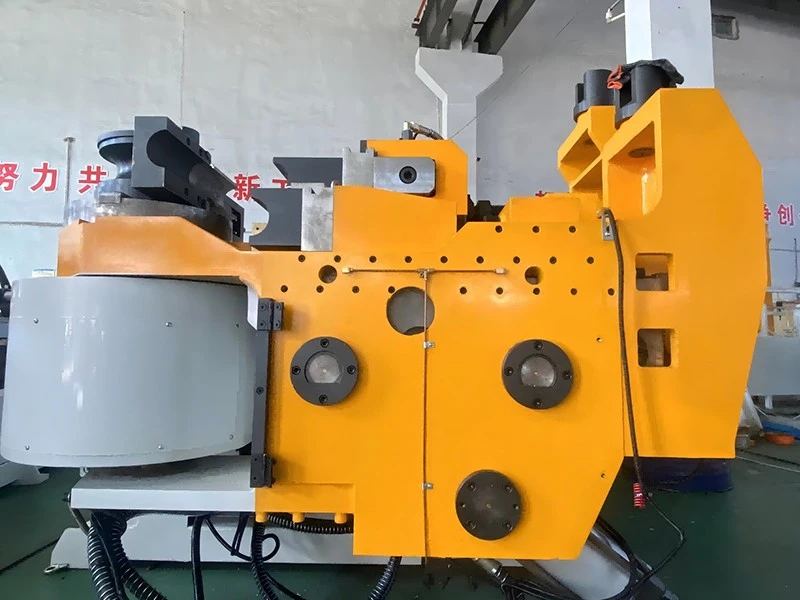

3. The Mandrel
The mandrel is another important part of the NC pipe bending machine. It's a rod that is inserted into the pipe during the bending process. The main function of the mandrel is to support the inside of the pipe, preventing it from collapsing or wrinkling during the bend.
There are different types of mandrels, such as the solid mandrel, the segmented mandrel, and the ball - joint mandrel. The solid mandrel is a single, solid rod, while the segmented and ball - joint mandrels are made up of multiple segments or joints. These types of mandrels can better conform to the shape of the bend, providing more support.
The mandrel is usually connected to a mandrel bar, which is controlled by the machine's hydraulic or electric system. The mandrel bar can be adjusted to different lengths and positions to ensure proper support for the pipe during the bending process. If you're dealing with heavy - wall pipes, you might want to consider a Heavy Wall Pipe Bender that is equipped with a suitable mandrel.
4. The Clamping System
The clamping system is responsible for holding the pipe in place during the bending process. It ensures that the pipe doesn't move or slip, which is essential for accurate bending. There are two main types of clamping systems: the front clamping system and the rear clamping system.
The front clamping system holds the pipe at the front end, near the bending die. It usually consists of a set of jaws that can be tightened around the pipe. The rear clamping system holds the pipe at the rear end, providing additional support and stability.
The clamping force can be adjusted depending on the size and material of the pipe. Too much clamping force can damage the pipe, while too little force can cause the pipe to slip during the bending process. Some modern NC pipe bending machines have automatic clamping systems that can adjust the clamping force based on the input parameters.
5. The Feeding System
The feeding system is what moves the pipe through the machine. It can be either manual or automatic. In a manual feeding system, the operator has to physically push or pull the pipe through the machine. This is suitable for small - scale operations or when bending pipes of different lengths.
An automatic feeding system, on the other hand, uses motors and conveyors to move the pipe through the machine. It can feed the pipe at a consistent speed, which improves the efficiency and accuracy of the bending process. The automatic feeding system can also be programmed to feed the pipe a specific length for each bend.
Some NC pipe bending machines have a semi - automatic feeding system, which combines the features of both manual and automatic feeding. If you're looking for a more cost - effective option with some automation features, you might want to check out our Semi - automatic Pipe Bending Machine.
6. The Hydraulic or Electric System
Most NC pipe bending machines use either a hydraulic or an electric system to power their components. The hydraulic system uses hydraulic fluid to transmit power. It can generate a large amount of force, which is suitable for bending thick - walled pipes or pipes made of high - strength materials.
The hydraulic system consists of a hydraulic pump, hydraulic cylinders, and valves. The pump pressurizes the hydraulic fluid, which is then sent to the cylinders. The cylinders convert the hydraulic pressure into mechanical force, which is used to move the bending arm, the mandrel, and the clamping system.
The electric system, on the other hand, uses electric motors to power the machine's components. It is more energy - efficient and quieter than the hydraulic system. Electric systems are also easier to control and maintain. They are often used in smaller - scale NC pipe bending machines or in applications where noise and energy consumption are a concern.
Why Choose Our NC Pipe Bending Machines?
Our NC pipe bending machines are designed with the latest technology and high - quality components. We offer a wide range of machines to suit different needs and budgets. Whether you're a small - scale manufacturer or a large industrial company, we have the right machine for you.
Our machines are easy to operate and maintain. The control system is user - friendly, and our technical support team is always ready to help you with any questions or issues. We also provide training for our customers to ensure that they can get the most out of our machines.
If you're in the market for an NC pipe bending machine, don't hesitate to contact us. We can discuss your specific requirements and help you choose the best machine for your business. We offer competitive prices and excellent after - sales service. Let's work together to take your pipe - bending operations to the next level!
References
- "Pipe Bending Handbook" by some industry expert
- Manufacturer's manuals of various NC pipe bending machines
So, there you have it - the main components of an NC pipe bending machine. I hope this blog has been helpful to you. If you have any more questions, feel free to reach out, and we can start a conversation about how our machines can meet your needs.