


As a provider of tube bending services, I often encounter a wide range of inquiries from clients regarding the capabilities of our processes. One question that has come up more frequently than one might expect is, "Can tube bending service bend tubes with a triangular cross - section?" In this blog post, I'll delve into this topic, exploring the technical aspects, challenges, and possibilities associated with bending triangular - cross - section tubes.
Understanding Tube Bending Basics
Before we specifically address triangular - cross - section tubes, it's essential to understand the fundamentals of tube bending. Tube bending is a manufacturing process used to shape tubes into various forms, such as curves, angles, and coils. There are several methods of tube bending, including rotary draw bending, compression bending, roll bending, and mandrel bending. Each method has its own advantages and is suitable for different tube materials, sizes, and bending requirements.
Rotary draw bending is one of the most common methods. It involves clamping the tube in a die and then rotating a bend die around the tube to form the desired bend. Compression bending, on the other hand, applies pressure to the tube to force it into a curved shape. Roll bending uses a series of rolls to gradually bend the tube into a circular or other curved shape. Mandrel bending is used when high - quality bends with minimal deformation are required, especially for thin - walled tubes.
Challenges of Bending Triangular - Cross - Section Tubes
Bending tubes with a triangular cross - section presents several unique challenges compared to round or rectangular tubes.
Structural Integrity
One of the primary challenges is maintaining the structural integrity of the tube during the bending process. Triangular tubes have a different stress distribution compared to round tubes. When a round tube is bent, the stress is distributed more evenly around the circumference. In contrast, a triangular tube has sharp corners and flat sides, which can cause stress concentrations at the corners during bending. These stress concentrations can lead to cracking, wrinkling, or other forms of deformation, especially if the bending process is not carefully controlled.
Tooling Design
Another challenge is the design of the bending tooling. Traditional tube - bending dies are designed primarily for round or rectangular tubes. Bending a triangular tube requires specialized tooling that can accommodate the unique shape of the tube. The tooling must be able to grip the tube securely without causing damage to the corners or sides and must be designed to apply the appropriate amount of force to achieve the desired bend without deforming the tube excessively.
Material Flow
The material flow during the bending process is also more complex for triangular tubes. When a tube is bent, the outer surface of the bend is stretched, while the inner surface is compressed. In a triangular tube, the material flow is affected by the shape of the cross - section, and the flat sides and sharp corners can cause uneven material flow. This can result in inconsistent wall thickness and shape distortion in the bent tube.
Possibilities and Solutions
Despite these challenges, it is indeed possible to bend tubes with a triangular cross - section using the right techniques and equipment.
Advanced Bending Techniques
Advanced bending techniques can be employed to overcome the challenges associated with bending triangular tubes. For example, using a mandrel during the bending process can help to support the tube from the inside and prevent wrinkling and deformation. The mandrel can be designed to match the shape of the triangular tube, providing support at the corners and along the sides.
Another technique is to use incremental bending, where the tube is bent in small increments rather than in one single operation. This allows for better control of the material flow and reduces the risk of excessive deformation. Incremental bending can be combined with heat treatment to further improve the formability of the tube and reduce the risk of cracking.

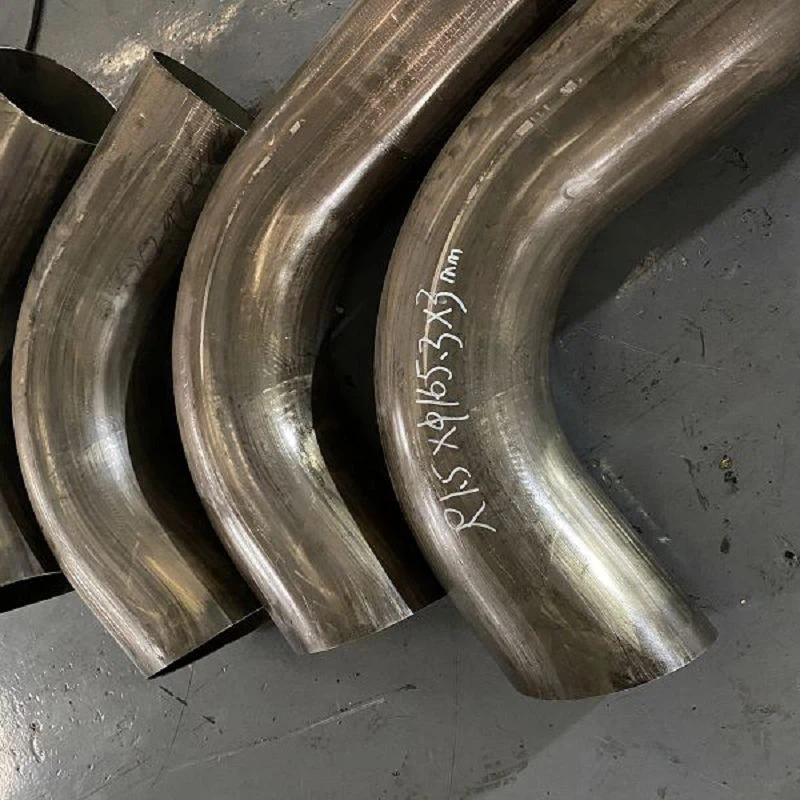
Customized Tooling
As mentioned earlier, customized tooling is essential for bending triangular tubes. At our [Tube Bending Service], we have the expertise and resources to design and manufacture specialized bending dies and fixtures for triangular tubes. Our engineers work closely with clients to understand their specific requirements and develop tooling solutions that ensure high - quality bends with minimal deformation.
Material Selection
The choice of material also plays a crucial role in the bending process. Some materials are more suitable for bending triangular tubes than others. For example, stainless steel and aluminum are popular choices due to their good formability and corrosion resistance. We offer a wide range of materials for tube bending, including Tube Bending Metal Stainless Steel and Custom Aluminum Tube Bending. Our team can help clients select the most appropriate material based on their application requirements and the desired bending characteristics.
Applications of Bent Triangular Tubes
Bent triangular tubes have a variety of applications in different industries.
Architectural and Structural Applications
In architecture and construction, bent triangular tubes can be used to create unique and aesthetically pleasing structures. They can be used for handrails, decorative elements, and structural supports. The triangular shape can add a modern and distinctive look to buildings and other structures.
Automotive and Aerospace Industries
In the automotive and aerospace industries, bent triangular tubes can be used for various components, such as exhaust systems, fuel lines, and structural frames. The triangular shape can provide better strength - to - weight ratio compared to round tubes in some applications, making them suitable for use in lightweight and high - performance vehicles.
Industrial Machinery
In industrial machinery, bent triangular tubes can be used for conveyor systems, robotic arms, and other mechanical components. The unique shape of the tube can provide better stability and support in certain applications.
Our Tube Bending Services
As a leading provider of Full - service Tube Bending, we have the experience and expertise to handle the bending of tubes with a triangular cross - section. Our state - of - the - art facilities are equipped with the latest tube - bending equipment, including CNC - controlled bending machines that offer high precision and repeatability.
We offer a comprehensive range of tube - bending services, including design assistance, prototyping, and production manufacturing. Our team of engineers and technicians can work closely with you to understand your specific requirements and develop customized solutions to meet your needs. Whether you need a small batch of prototype parts or a large - scale production run, we have the capabilities to deliver high - quality bent tubes on time and within budget.
Contact Us for Your Tube Bending Needs
If you have a project that requires the bending of tubes with a triangular cross - section or any other tube - bending needs, we invite you to contact us. Our team is ready to assist you with your inquiries and provide you with a free quote. We are committed to providing the highest level of customer service and quality products, and we look forward to working with you on your next project.
References
- "Tube Bending Handbook" by John Doe
- "Advanced Manufacturing Processes for Tubular Components" by Jane Smith
- Industry research reports on tube bending and manufacturing