




Introduction
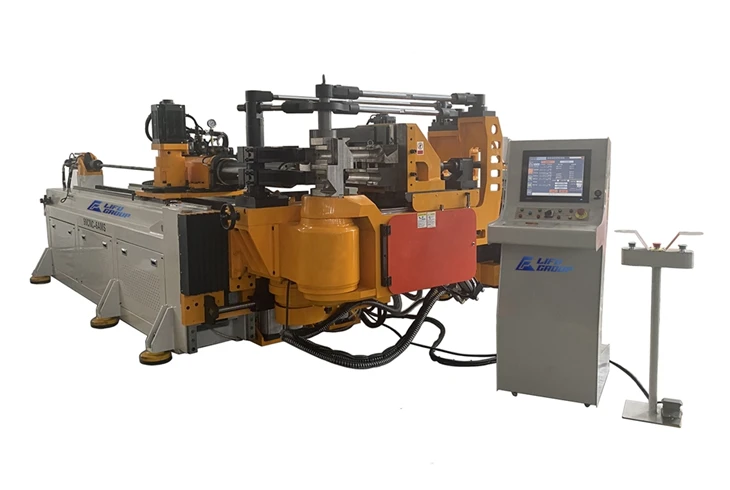
The aluminum tube bending machine is an advanced equipment designed for aluminum profile bending and forming. It consists of a precision CNC control system, a high-strength processing head, a multifunctional mold set, and a stable mechanical structure. It is widely used in automobiles, aerospace, medical equipment, construction, electronics and electrical, and petrochemicals.
Feature
High-precision processing
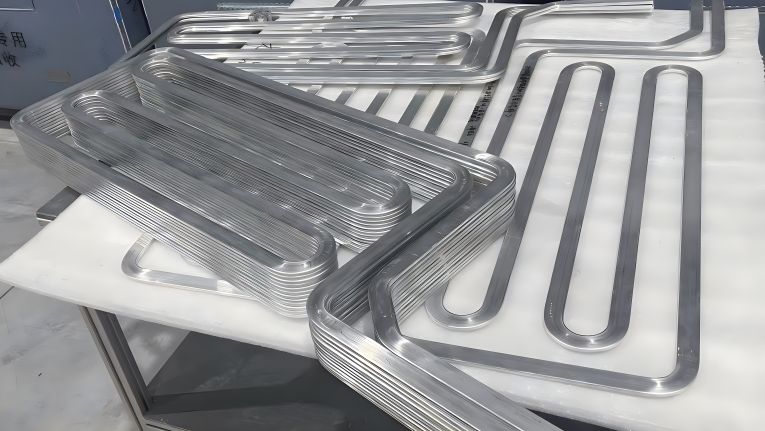
The high precision of the aluminum tube bending machine comes from its advanced CNC system and precision processing head. The CNC system adjusts parameters in real time through algorithms and sensors to ensure that the bending angle, shape, and size are accurate and correct. Its positioning accuracy is as high as ±0.05mm, and the repeated positioning accuracy is ±0.02mm. The 5-13 axis servo motor is precisely controlled to achieve complex curve processing, and can easily cope with left bends, right bends, large radius, and spiral bends.
Efficient production
Automated and semi-automated processing methods have significantly improved the production efficiency of aluminum tube bending machines. Compared with traditional manual bending, the production efficiency is increased by more than 300%, and 500 aluminum tubes can be processed per hour to meet large-scale production needs. At the same time, it reduces manual intervention and dependence on highly skilled workers.
Easy and intelligent operation
The aluminum tube bending machine's intuitive and easy-to-understand operating interface and intelligent control system make it easy to operate, and workers can get started after a short training. The industrial computer system has a 3D interference inspection function, which simulates the processing process in real-time to avoid collisions and interference. At the same time, it can be connected to robots and three-dimensional measuring instruments to achieve automatic loading and unloading and precise measurement.
Stable and reliable
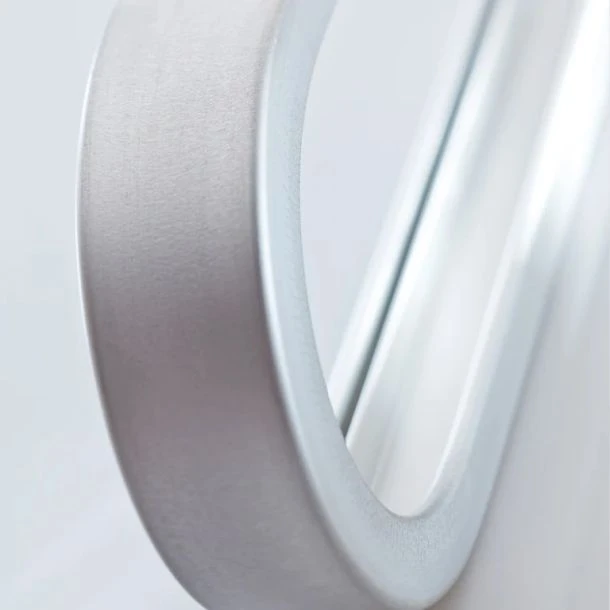
The aluminum tube bending machine adopts advanced control systems and electrical components and undergoes strict quality inspections to ensure long-term stable operation with a failure rate of less than 1%. It is also equipped with safety protection devices and emergency stop buttons to ensure safe operation.
Maintenance recommendations
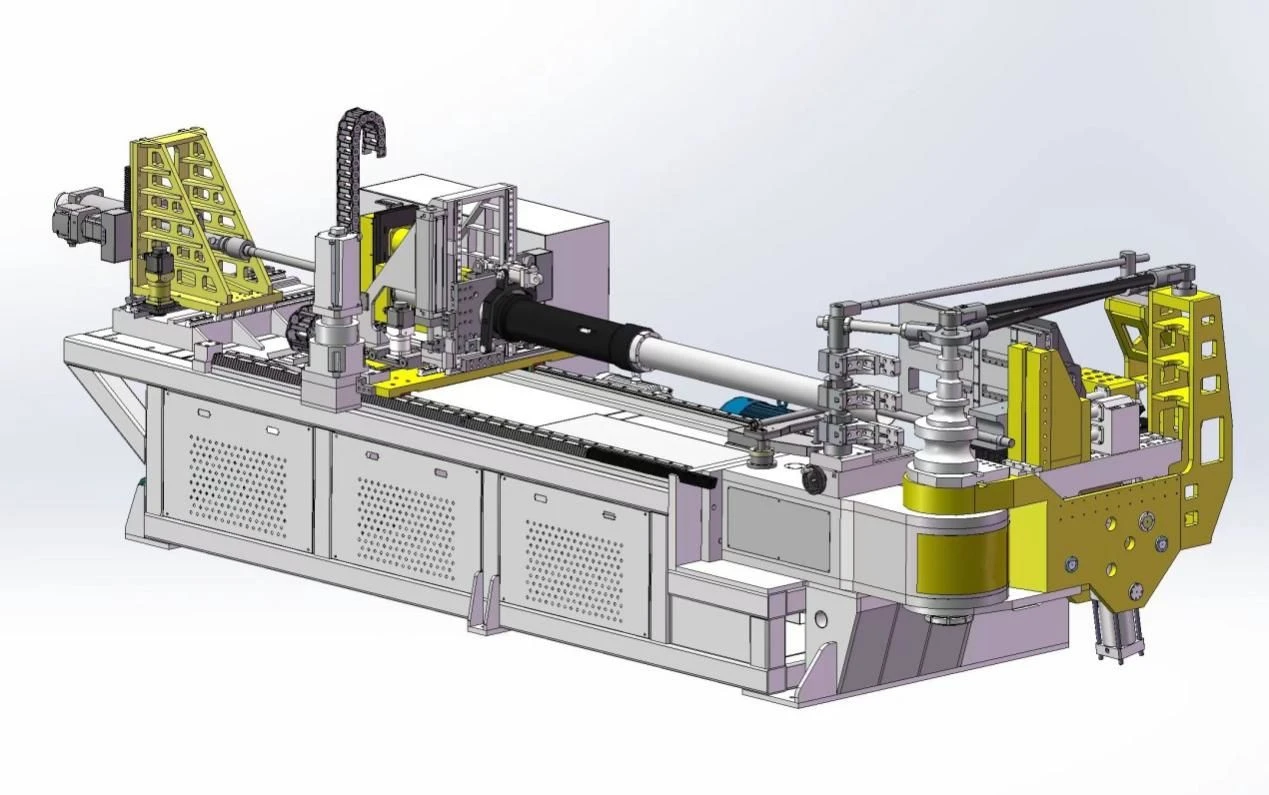
- Daily cleaning and lubrication: Clean the surface and interior of the machine regularly to remove metal chips, dust, and other dirt; lubricate moving parts such as bearings and slide rails to reduce wear.
- Regular inspection and tightening: Check the operating status of the machine to promptly detect abnormalities such as abnormal noise and vibration; tighten bolts, nuts, and other connectors to ensure the stability of the machine.
- Regular replacement of wearing parts: Regularly replace wearing parts such as filter elements and belts according to usage to prevent failures.
- Preventive maintenance: Use vibration analysis, oil analysis, and other technologies to monitor the machine status and predict potential failures; perform infrared thermal imaging, ultrasonic testing, etc., to detect internal defects of the equipment.
- Standardized operation and maintenance: Operators should strictly follow the operating procedures and record maintenance conditions; maintenance personnel must have the corresponding qualifications to ensure effective maintenance; keep the environment around the machine clean and ensure that safety protection devices are complete.
Why Choose Us
Rich experience
A technical team with more than ten years of experience in designing and manufacturing pipeline processing equipment, with strong professional skills.
Full technical certification
Passed CE standard certification and ISO9001 quality management system certification, and our technical strength is internationally recognized.
Large production scale
The factory covers a large area and has many large-scale, advanced CNC processing machines, with considerable annual output, which can quickly respond to large-scale order needs.
Wide global market
Products are sold well in more than ten countries and regions, including China, Russia, India, Southeast Asia, Japan, Mexico, South Africa, Iran, Brazil, Latin America, etc., and the international market share is gradually expanding.
FAQ
Q: How about the delivery time?
A: Usually, it takes 30 working days for production.
Q: Do you provide all the operations and maintenance manuals in English?
A: Rich in overseas transaction experience, we have a full set of documentation, user manuals, and assembly guidance, all in English. You do not need to have any concerns about language issues.
Q: Do you offer any after-sales services?
A: After finalizing the product, we clear up the production line and send you photos and videos for your assurance. Upon request, our experienced technicians and engineers can provide installation and training services. Our customer service team is also always available to answer any inquiries if needed.
Q: What's your payment term?
A: T/T or L/C, 30% as deposit, the balance needs to be paid before delivery, but after inspection.
Q: Can your pipe-bending machines be customized?
A: Yes, we can use your control systems and print your logo on the machine; OEM is accepted for Hippo.
Q: How does an aluminum tube bending machine work?
A: An aluminum tube bending machine works by applying mechanical, hydraulic, or CNC-controlled force to gradually bend the tube around a die. Mandrel bending is often used to prevent the tube from collapsing or wrinkling, especially for thin-walled aluminum tubing.
Q: How do I prevent aluminum tubes from cracking during bending?
A: To prevent cracking, use a mandrel bender, choose the correct die size, and consider annealing (softening the aluminum with heat) before bending. Lubrication also helps reduce friction and stress on the material.
Q: Can an aluminum tube bending machine be used for stainless steel or copper?
A: Some aluminum tube bending machines can also bend stainless steel, copper, and brass, but aluminum requires a lower bending force compared to stainless steel. Make sure the machine is suitable for different materials before use.
Q: How do I choose the right aluminum tube bending machine?
A: Consider factors such as tube diameter, wall thickness, required bending angles, production volume, and automation level (manual, hydraulic, or CNC) when selecting an aluminum tube bending machine.
Q: How do I maintain an aluminum tube bending machine?
A: Regular maintenance includes cleaning and lubricating dies, checking hydraulic fluid levels, inspecting moving parts for wear, and ensuring proper alignment. Proper maintenance extends machine life and ensures accurate bends.
Technical Parameters
|
CNC Technical Parameters |
|||||||||||||
|
Model |
Unit |
CNC18 |
CNC25 |
CNC38 |
CNC50 |
CNC65 |
CNC76 |
CNC90 |
CNC110 |
CNC130 |
CNC168 |
CNC219 |
CNC273 |
|
Maximum bending capacity |
mm |
Φ18x1.6 |
Φ25x2.0 |
Φ38x1.8 |
Φ50x2.0 |
Φ65x2.5 |
Φ75x2.5 |
Φ89x2.5 |
Φ110x5.0 |
Φ130x5.0 |
Φ168x16.5 |
Φ219x16 |
Φ270x20 |
|
Round tube/stainless steel tube |
mm |
Φ18x0.8 |
Φ25x1.8 |
Φ38x1.2 |
Φ50x1.3 |
Φ65x1.6 |
Φ75x1.9 |
Φ89x1.5 |
Φ110x2.0 |
Φ130x2.5 |
Φ168x4.0 |
Φ219x14 |
Φ270x14 |
|
Square tube/metal |
mm |
□15x1.2 |
□16x2.5 |
□30x1.5 |
□40x1.8 |
□50x2.3 |
□60x2.5 |
□75x2.5 |
□90x2.0 |
□90x6.0 |
□110x6.5 |
□189x14 |
□200x14 |
|
Maximum bend outer diameter for |
mm |
φ10 |
φ25 |
φ38 |
φ50 |
φ65 |
φ70 |
φ70 |
φ90 |
φ114 |
φ114 |
φ129 |
φ129 |
|
Bending radius |
mm |
10~80 |
20~100 |
25~150 |
30~230 |
30~320 |
40~250 |
40~250 |
50~280 |
80~500 |
90~500 |
120~800 |
130~1000 |
|
Bending radius range/ Square tube |
mm |
15~70 |
20~87 |
25~130 |
30~190 |
35~210 |
40~240 |
45~105 |
50~300 |
80~430 |
90~410 |
120~801 |
130~1000 |
|
Bending angle range |
degree |
190 |
190 |
190 |
190 |
190 |
190 |
190 |
190 |
190 |
190 |
190 |
190 |
|
Two-layer R maximum dfference R1-R2 |
mm |
20 |
50 |
50 |
65 |
75 |
85 |
85 |
100 |
130 |
145 |
170 |
180 |
|
Maximum effective distance |
mm |
1200 |
1500 |
3200 |
2200 |
3200 |
4000 |
4000 |
4000 |
5000 |
6000 |
1400 |
6000 |
|
Workbench height (mold center to ground height) |
mm |
1100 |
900 |
1100 |
1100 |
1100 |
1125 |
1100 |
1250 |
1300 |
1400 |
1400 |
1400 |
|
Mold center line height |
mm |
22 |
30 |
28 |
40 |
50 |
55 |
65 |
80 |
90 |
120 |
165 |
185 |
|
Bending [D.O.B] Speed |
deg/sec |
220 |
220 |
160 |
105 |
100 |
75 |
75 |
75 |
70 |
38 |
38 |
28 |
|
Bending (D.O.B| Sccuracy |
degree |
±0.05 |
±0.05 |
±0.05 |
±0.05 |
±0.05 |
±0.05 |
±0.05 |
±0.05 |
±0.05 |
±0.05 |
±0.05 |
±0.05 |
|
Feeding[D.B.B] Speed |
mm/sec |
2000 |
2000 |
1400 |
1400 |
200~900 |
200~900 |
900 |
900 |
900 |
800 |
800 |
600 |
|
Feeding (D.B.B.] Accuracy |
mm |
±0.05 |
±0.05 |
±0.05 |
±0.05 |
±0.05 |
±0.05 |
±0.05 |
±0.05 |
±0.05 |
±0.05 |
±0.05 |
±0.05 |
|
Transter tube|P.O.B.) Speed |
deg/sec |
300 |
300 |
300 |
200 |
200 |
200 |
200 |
200 |
200 |
90 |
90 |
90 |
|
Transter tube[P.O.B.]Accuracy |
mm |
±0.05 |
±0.05 |
±0.05 |
±0.05 |
±0.05 |
±0.05 |
±0.05 |
±0.05 |
±0.05 |
±0.05 |
±0.05 |
±0.05 |
|
Hvdraulic svstem motor |
kw |
1.7 |
2.2 |
2.2 |
3.8 |
5.5 |
11 |
15 |
22 |
22 |
30x2 |
45x2+11 |
55x2+11 |
|
Machine width |
mm |
900 |
900 |
900 |
900 |
1150 |
1500 |
1500 |
1700 |
2000 |
2200 |
2300 |
3400 |
|
Machine width |
mm |
1250 |
1250 |
1250 |
1300 |
1400 |
1400 |
1500 |
2100 |
2100 |
2300 |
2300 |
2700 |
|
Machine length |
mm |
2600 |
2900 |
4300 |
4300 |
5800 |
6800 |
6800 |
7000 |
9000 |
10000 |
11000 |
11500 |
|
Machine weight |
kg |
900 |
1000 |
2800 |
3200 |
5800 |
7500 |
7900 |
12000 |
13000 |
29000 |
38000 |
55000 |