


What is the minimum bending radius of an nc pipe bending machine?
As a supplier of NC pipe bending machines, I often receive inquiries from customers about the minimum bending radius of these machines. Understanding the minimum bending radius is crucial for ensuring the quality and efficiency of pipe bending operations. In this blog post, I will delve into the concept of the minimum bending radius, factors affecting it, and its significance in the context of NC pipe bending machines.
The minimum bending radius refers to the smallest radius to which a pipe can be bent without causing significant deformation, cracking, or other defects. It is a critical parameter in pipe bending as it determines the feasibility of a particular bending operation and the quality of the bent pipe. When the bending radius is too small, the pipe may experience excessive stress, leading to wall thinning, wrinkling, or even rupture. On the other hand, a larger bending radius may result in a less compact and less aesthetically pleasing bend.

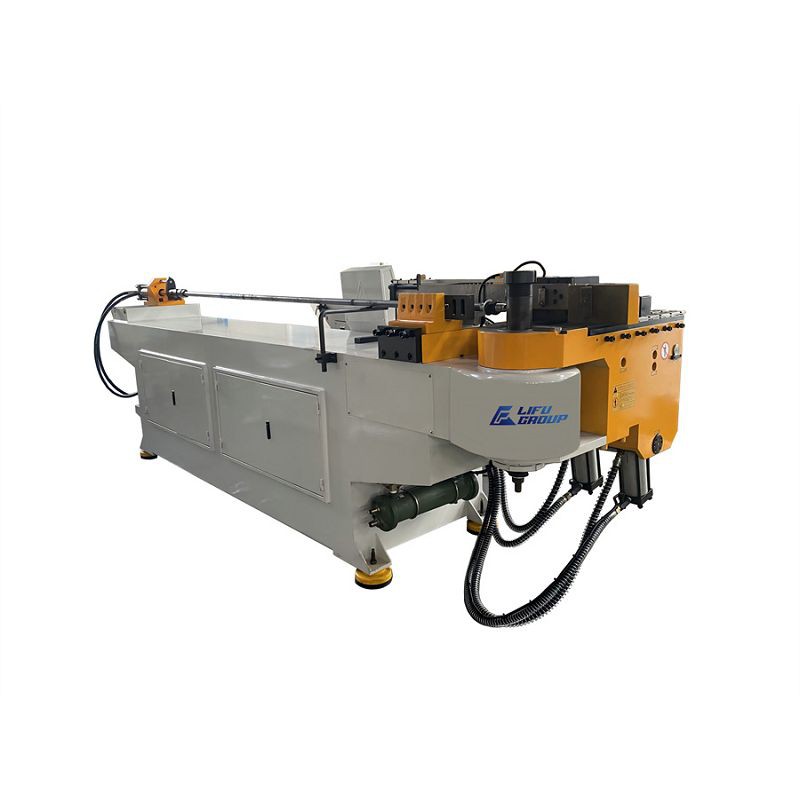
Several factors influence the minimum bending radius of an NC pipe bending machine. One of the primary factors is the material of the pipe. Different materials have different mechanical properties, such as strength, ductility, and elasticity, which affect their ability to withstand bending. For example, soft materials like copper and aluminum generally have a smaller minimum bending radius compared to harder materials like steel and stainless steel. This is because soft materials are more ductile and can be bent more easily without cracking or breaking.
The diameter and wall thickness of the pipe also play a significant role in determining the minimum bending radius. Generally, larger diameter pipes require a larger bending radius to avoid excessive deformation. Similarly, pipes with thicker walls can withstand smaller bending radii compared to pipes with thinner walls. This is because thicker walls provide more structural support and resistance to bending forces.
The type of bending process used by the NC pipe bending machine also affects the minimum bending radius. There are several bending processes available, including rotary draw bending, compression bending, and roll bending. Each process has its own advantages and limitations, and the minimum bending radius may vary depending on the process used. For example, rotary draw bending is a precise and efficient bending process that can achieve relatively small bending radii. However, it requires specialized tooling and may be more expensive compared to other bending processes.
In addition to these factors, the design and capabilities of the NC pipe bending machine itself also influence the minimum bending radius. Modern NC pipe bending machines are equipped with advanced control systems and precision tooling, which allow for more accurate and consistent bending operations. These machines can be programmed to achieve specific bending radii and angles, ensuring high-quality bends. However, the minimum bending radius achievable by a particular machine may be limited by its mechanical design, tooling capabilities, and the power of its bending mechanism.
Understanding the minimum bending radius is essential for selecting the right NC pipe bending machine for a specific application. When choosing a machine, it is important to consider the material, diameter, and wall thickness of the pipes to be bent, as well as the required bending radius and angle. By selecting a machine with the appropriate capabilities, you can ensure that your pipe bending operations are efficient, cost-effective, and produce high-quality bends.
At our company, we offer a wide range of NC pipe bending machines that are designed to meet the diverse needs of our customers. Our machines are equipped with advanced features and technologies, such as CNC control systems, servo motors, and precision tooling, which allow for accurate and efficient bending operations. We also provide customized solutions to meet the specific requirements of our customers, including the ability to achieve small bending radii.
If you are in the market for an NC pipe bending machine, we invite you to explore our product range. We offer a variety of machines, including Soft Copper Tubing Bender, Bending Machines NC, and Semi-automatic Pipe Bender. Our experienced sales team can provide you with detailed information about our machines and help you select the right one for your application.
In conclusion, the minimum bending radius is a critical parameter in pipe bending operations, and understanding it is essential for ensuring the quality and efficiency of these operations. By considering the material, diameter, wall thickness, bending process, and machine capabilities, you can select the right NC pipe bending machine for your specific needs. If you have any questions or would like to learn more about our products, please do not hesitate to contact us. We look forward to working with you and helping you achieve your pipe bending goals.
References
- ASME B31.3 Process Piping Code
- ASTM Standards for Pipe Materials
- Pipe Bending Handbook, various editions