


Hey there! As a supplier of Industrial Pipe Benders, I often get asked about the maximum pipe diameter an industrial pipe bender can handle. It's a crucial question for businesses in various industries, from construction to manufacturing, as the right pipe diameter capacity can make or break a project. So, let's dive into this topic and explore the factors that determine the maximum pipe diameter an industrial pipe bender can manage.
Understanding Industrial Pipe Benders
First off, let's quickly go over what industrial pipe benders are. These machines are designed to bend pipes made of different materials, such as steel, aluminum, and copper, into various shapes and angles. They're used in a wide range of applications, including plumbing, HVAC systems, and structural construction. There are different types of industrial pipe benders, each with its own capabilities and limitations. For instance, you've got Heavy Wall Pipe Benders that are built to handle thick-walled pipes, and Soft Copper Tubing Benders that are more suited for thin, flexible copper tubes.
Factors Affecting the Maximum Pipe Diameter
Now, what determines the maximum pipe diameter an industrial pipe bender can handle? Well, there are several key factors to consider:
Machine Design and Construction
The design and construction of the pipe bender play a huge role. Industrial pipe benders come in different sizes and configurations, and the larger and more robust the machine, the greater the pipe diameter it can typically handle. For example, a heavy-duty industrial pipe bender with a strong frame and powerful bending mechanism will be able to bend larger pipes compared to a smaller, more lightweight model.
Bending Method
There are different bending methods used in industrial pipe benders, such as rotary draw bending, roll bending, and mandrel bending. Each method has its own limitations when it comes to pipe diameter. Rotary draw bending, for instance, is commonly used for smaller to medium-sized pipes and can usually handle diameters up to a certain point. Roll bending, on the other hand, is better suited for larger pipes and can handle diameters that are significantly larger than what rotary draw bending can manage.
Material Properties
The material of the pipe also affects the maximum diameter that can be bent. Different materials have different levels of flexibility and strength. For example, steel pipes are generally stronger and less flexible than copper pipes. So, a pipe bender that can handle a large diameter copper pipe might not be able to handle the same diameter steel pipe due to the difference in material properties.
Tooling
The tooling used in the pipe bender is another important factor. The bending dies and other components need to be designed to accommodate the specific pipe diameter. If the tooling is not properly sized or designed for the pipe diameter, it can lead to issues such as uneven bends, pipe deformation, or even damage to the machine.
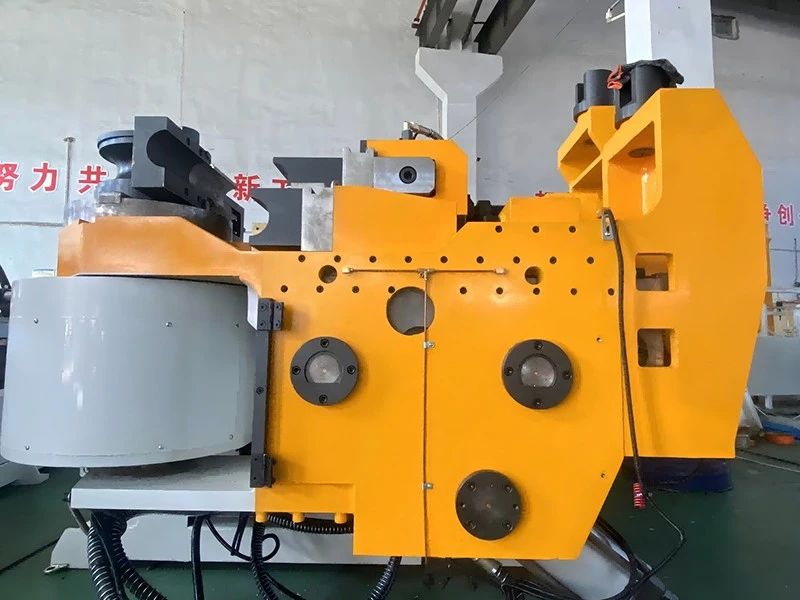

Typical Maximum Pipe Diameters
So, what are the typical maximum pipe diameters that industrial pipe benders can handle? Well, it really depends on the type of machine and its intended application.
Small to Medium-Sized Pipe Benders
For small to medium-sized industrial pipe benders, which are often used in workshops and smaller manufacturing facilities, the maximum pipe diameter can range from around 1/2 inch to 6 inches. These machines are usually more affordable and easier to operate, but they have limitations when it comes to bending larger pipes.
Large Industrial Pipe Benders
On the other hand, large industrial pipe benders, which are commonly used in heavy construction and large-scale manufacturing projects, can handle much larger pipe diameters. Some of these machines can handle pipe diameters of up to 48 inches or even larger. However, these machines are typically more expensive and require more space and expertise to operate.
Choosing the Right Pipe Bender for Your Needs
When it comes to choosing an industrial pipe bender, it's important to consider your specific needs and requirements. Here are some tips to help you make the right decision:
Determine Your Pipe Diameter Requirements
The first step is to determine the maximum pipe diameter that you'll need to bend for your projects. This will help you narrow down your options and choose a pipe bender that can handle the sizes you need.
Consider the Material of the Pipes
As mentioned earlier, the material of the pipes you'll be bending is an important factor. Make sure the pipe bender you choose is suitable for the type of material you'll be working with.
Evaluate the Bending Method
Think about the bending method that will work best for your applications. Different bending methods have different advantages and disadvantages, so choose the one that will give you the best results for your specific projects.
Look at the Machine's Features and Capabilities
In addition to the maximum pipe diameter, consider other features and capabilities of the pipe bender, such as the bending angle range, the speed of operation, and the level of automation. These features can have a big impact on the efficiency and quality of your bending operations.
Our Industrial Pipe Benders
At our company, we offer a wide range of Industrial Pipe Benders that are designed to meet the needs of different industries and applications. Our machines are built with high-quality materials and advanced technology to ensure reliable performance and accurate bending results. Whether you need to bend small pipes for a plumbing project or large pipes for a construction job, we have the right pipe bender for you.
Conclusion
In conclusion, the maximum pipe diameter an industrial pipe bender can handle depends on several factors, including the machine design, bending method, material properties, and tooling. By understanding these factors and choosing the right pipe bender for your needs, you can ensure that your bending operations are efficient, accurate, and successful.
If you're in the market for an industrial pipe bender and have any questions or need help choosing the right machine, don't hesitate to get in touch with us. We're here to assist you and provide you with the best solutions for your pipe bending needs. Let's work together to take your projects to the next level!
References
- "Pipe Bending Handbook" - A comprehensive guide to pipe bending techniques and equipment.
- Industry reports and studies on industrial pipe bending technology and applications.