


Hey there! As a supplier of NC pipe bending machines, I often get asked about how to calibrate these bad boys. Calibration is super important to ensure your machine is working at its best and producing high - quality bent pipes. So, let's dive right in and talk about the steps to calibrate an NC pipe bending machine.
1. Pre - calibration Checks
Before you start the actual calibration process, it's essential to do a few pre - checks. First off, make sure the machine is clean. Any dirt, debris, or leftover pipe shavings can mess with the calibration. Check all the moving parts for signs of wear and tear. If you notice any loose bolts or parts that seem out of place, tighten or replace them as needed.
Also, take a look at the hydraulic system (if your machine has one). Check the fluid level and make sure there are no leaks. Low fluid levels or leaks can affect the machine's performance during calibration. And don't forget to inspect the electrical connections. Loose or damaged wires can lead to inaccurate readings and cause problems down the line.
2. Measuring the Pipe
The next step is to measure the pipe you'll be using for calibration. You need to know the outer diameter, wall thickness, and length of the pipe accurately. Use a reliable measuring tool like a caliper for the diameter and wall thickness, and a tape measure for the length.
The reason for this is that the calibration settings of the NC pipe bending machine are based on these pipe dimensions. If you measure incorrectly, the calibration will be off, and you'll end up with bent pipes that don't meet the specifications. So, take your time and double - check your measurements.
3. Setting up the Machine
Once you've measured the pipe, it's time to set up the machine. First, select the appropriate bending die for your pipe diameter. The bending die is what shapes the pipe into the desired bend. Make sure it's installed correctly and securely on the machine.
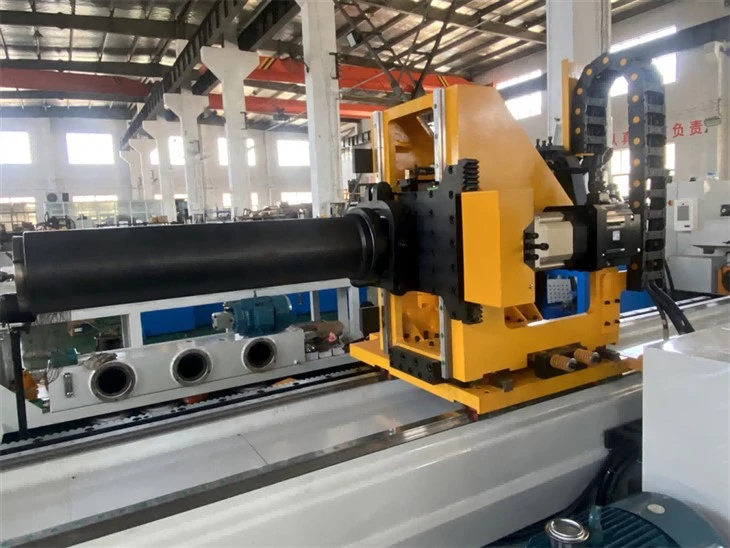

Next, adjust the clamping mechanism. The clamps hold the pipe in place during the bending process. They need to be tight enough to prevent the pipe from slipping but not so tight that they damage the pipe. You may need to do some trial - and - error here to find the right clamping force.
Now, enter the pipe dimensions and the desired bend angle into the machine's control panel. This is where the NC (Numerical Control) part comes in. The machine uses these inputs to calculate the bending process. Make sure you enter the values accurately; otherwise, the machine will bend the pipe at the wrong angle.
4. Initial Test Bend
After setting up the machine, it's time to do an initial test bend. Take a short piece of pipe and run it through the bending process. This will give you an idea of how the machine is performing and whether the calibration settings are close to being correct.
Inspect the bent pipe carefully. Check the bend angle using a protractor or an angle gauge. If the angle is off, you'll need to make adjustments to the machine's settings. You can usually do this through the control panel. Increase or decrease the bend angle value until you get closer to the desired angle.
Also, look at the shape of the bend. It should be smooth and free of kinks or wrinkles. If you notice any irregularities, it could mean that the bending die is not the right size or that the clamping force is incorrect. Make the necessary adjustments and run another test bend.
5. Fine - Tuning the Calibration
Once you've got the bend angle close to the desired value, it's time to fine - tune the calibration. This involves making small adjustments to the machine's settings to get the most accurate bend possible.
One important factor to consider is the spring - back effect. When you bend a pipe, it tends to spring back a little after the bending force is removed. The amount of spring - back depends on the material of the pipe and its dimensions. You need to account for this in the calibration settings.
To do this, you can run a few more test bends and measure the actual bend angle after the spring - back has occurred. Then, adjust the calibration settings to compensate for the spring - back. Keep doing this until you get the desired bend angle consistently.
6. Checking the Repeatability
Another crucial aspect of calibration is checking the repeatability of the machine. This means that the machine should be able to produce the same bend angle and quality on multiple pipes.
Run several pipes through the bending process using the same calibration settings. Measure the bend angle and inspect the quality of each bent pipe. If there are significant variations between the pipes, it means the calibration is not stable.
You may need to re - check all the settings, including the bending die, clamping force, and the machine's control panel inputs. Make any necessary adjustments and run more test bends until you achieve consistent results.
7. Final Verification
Once you're satisfied with the calibration, it's time for a final verification. Take a batch of pipes and bend them using the calibrated machine. Inspect each pipe carefully to ensure they meet the required specifications.
Check the bend angle, the shape of the bend, and the overall quality of the pipe. If everything looks good, then your NC pipe bending machine is successfully calibrated.
Types of NC Pipe Bending Machines
There are different types of NC pipe bending machines available in the market. For example, the Semi - automatic Pipe Bending Machine is a great option if you need a machine that offers a balance between manual control and automation. It allows you to perform some operations manually while still benefiting from the precision of numerical control.
The Semi - automatic Pipe Bender is similar but may have different features and capabilities. It's ideal for small - to - medium - scale production where you need flexibility in the bending process.
And if you're looking for a machine for heavy - duty industrial use, the Industrial Pipe Bender is the way to go. It's designed to handle large - diameter pipes and high - volume production with precision and reliability.
Why Calibration Matters
Calibrating your NC pipe bending machine is not just a one - time thing. It needs to be done regularly to maintain the quality of the bent pipes. Over time, the machine's components can wear out, and the calibration can drift. This can lead to inaccurate bends, wasted materials, and increased production costs.
By calibrating the machine regularly, you can ensure that it's always operating at its peak performance. You'll get consistent results, reduce the number of rejected parts, and improve the overall efficiency of your production process.
Contact Us for Your NC Pipe Bending Machine Needs
If you're in the market for an NC pipe bending machine or need more information about calibration and maintenance, we're here to help. We've got a wide range of high - quality NC pipe bending machines that can meet your specific requirements. Whether you need a semi - automatic machine for a small workshop or an industrial - grade bender for large - scale production, we've got you covered.
Don't hesitate to reach out to us for a consultation. We can provide you with detailed product information, help you choose the right machine for your needs, and offer support on calibration and maintenance. Let's work together to take your pipe - bending operations to the next level.
References
- Pipe Bending Handbook, 3rd Edition
- Industrial Machinery Maintenance Guide
- NC Machine Technology Manual