


As a supplier of CNC tube coiling machines, ensuring the consistency of coiled tubes in a batch is not just a technical challenge but a commitment to quality that we take very seriously. In this blog, I'll delve into the various aspects of how our CNC tube coiling machines achieve this crucial goal.
Precision Engineering at the Core
The foundation of consistent tube coiling lies in the precision engineering of our CNC tube coiling machines. Every component is meticulously designed and manufactured to exacting standards. The mechanical structure of the machine provides a stable platform for the coiling process. For instance, the frame is made of high - strength steel that can withstand the forces exerted during tube coiling without deforming. This stability is essential as even the slightest movement or vibration can lead to variations in the coiled tubes.
The spindle and the drive system are also engineered with precision. The spindle rotates at a consistent speed, which is controlled by a high - quality servo motor. The servo motor receives signals from the CNC control system, allowing for accurate speed regulation. This means that regardless of the length or thickness of the tube being coiled, the spindle will maintain a constant rotational speed, resulting in uniform coils.
Advanced CNC Control System
Our CNC tube coiling machines are equipped with an advanced control system that is the brain behind the consistent coiling process. The control system allows operators to program all the parameters of the coiling operation, such as the coil diameter, pitch, and number of turns. Once the program is set, the machine will execute the coiling process with high repeatability.
The CNC control system continuously monitors and adjusts the machine's operation. It can detect any deviations from the programmed parameters in real - time and make immediate corrections. For example, if the tension in the tube changes during the coiling process, the control system can adjust the feed rate of the tube to maintain the desired coil characteristics. This real - time feedback loop ensures that each tube in the batch is coiled to the same specifications.
Quality Tooling
The tooling used in our CNC tube coiling machines plays a vital role in ensuring consistency. The coiling dies are made from high - quality materials and are precisely machined to the required dimensions. A well - designed coiling die will not only shape the tube accurately but also ensure that the tube is not damaged during the coiling process.
We also offer a range of interchangeable tooling options to accommodate different tube sizes and coil requirements. This flexibility allows our customers to produce a variety of coiled tubes using the same machine. When changing the tooling, the CNC control system can automatically adjust the machine settings to ensure that the new coil dimensions are achieved with the same level of consistency.
Material Handling and Preparation
Consistent tube coiling also depends on proper material handling and preparation. Before the coiling process begins, the tubes need to be straightened and cleaned. Our machines can be integrated with tube straightening and cleaning systems to ensure that the input tubes are in the best possible condition.
The feeding system of the CNC tube coiling machine is designed to handle the tubes smoothly and consistently. It uses sensors to detect the position and movement of the tube, ensuring that it is fed into the coiling area at the correct speed and angle. This precise feeding mechanism is crucial for achieving uniform coils throughout the batch.
Testing and Quality Assurance
We implement a rigorous testing and quality assurance process to ensure the consistency of coiled tubes. After each batch is produced, a sample of the coiled tubes is taken for inspection. We use a variety of measuring tools, such as calipers, micrometers, and coordinate measuring machines (CMMs), to check the dimensions of the coils.
We also perform non - destructive testing, such as ultrasonic testing and eddy current testing, to detect any internal defects in the tubes. If any deviations from the specifications are found, the machine settings can be adjusted, and the remaining tubes in the batch can be re - coiled to meet the required standards.
Comparison with Traditional Coiling Methods
Compared to traditional tube coiling methods, our CNC tube coiling machines offer significant advantages in terms of consistency. Traditional methods often rely on manual operation, which is prone to human error. Operators may have different levels of skill and experience, leading to variations in the coiled tubes.
In contrast, our CNC machines operate based on pre - programmed instructions, eliminating the influence of human factors. They can also perform the coiling process at a much faster rate while maintaining high precision. This not only improves the consistency of the coiled tubes but also increases the overall productivity of the manufacturing process.

Related Products
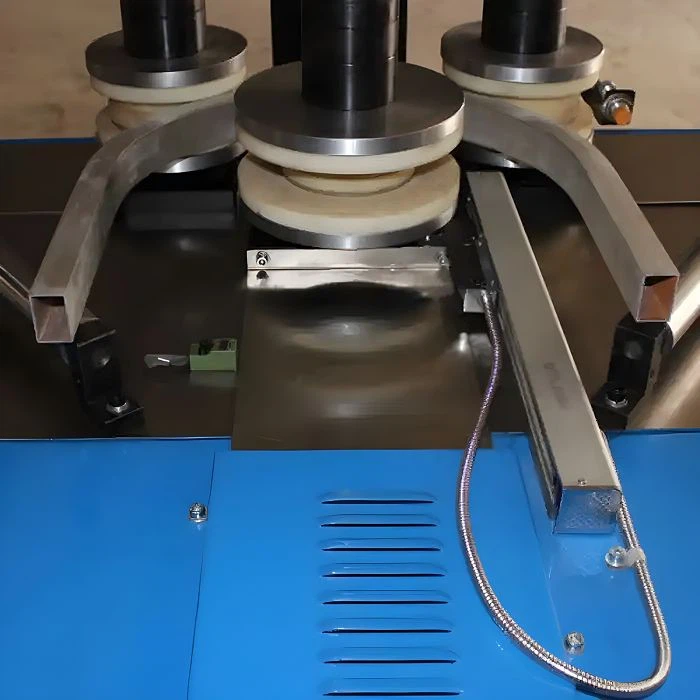
In addition to our CNC tube coiling machines, we also offer a range of related products such as the 3 Roller Pipe Bending Machine, Pipe Roller Bending Machine, and Steel Pipe Rolling Machine. These machines can be used in conjunction with the CNC tube coiling machines to provide a comprehensive tube processing solution.
Conclusion
In conclusion, our CNC tube coiling machines ensure the consistency of coiled tubes in a batch through a combination of precision engineering, advanced CNC control systems, high - quality tooling, proper material handling, and rigorous quality assurance processes. We are committed to providing our customers with the highest - quality tube coiling solutions that meet their specific requirements.
If you are interested in our CNC tube coiling machines or any of our related products, please feel free to contact us for a detailed discussion about your needs. We look forward to the opportunity to work with you and help you achieve your production goals.
References
- "CNC Machining Handbook", Industrial Press Inc.
- "Tube Bending and Coiling Technology", ASM International