


CNC pipe bending machines have revolutionized the pipe and tube bending industry, offering precision, efficiency, and versatility. One of the most remarkable capabilities of these machines is multi - radius bending. In this blog post, as a supplier of CNC pipe bending machines, I will delve into how a CNC pipe bending machine performs multi - radius bending, exploring the technology, process, and benefits.
Understanding the Basics of CNC Pipe Bending Machines
Before we discuss multi - radius bending, it's essential to understand the fundamentals of CNC pipe bending machines. These machines use computer numerical control (CNC) systems to automate the bending process. The CNC system precisely controls the movement of the bending tools, including the bending die, clamp die, and pressure die. This automation allows for highly accurate and repeatable bending operations.
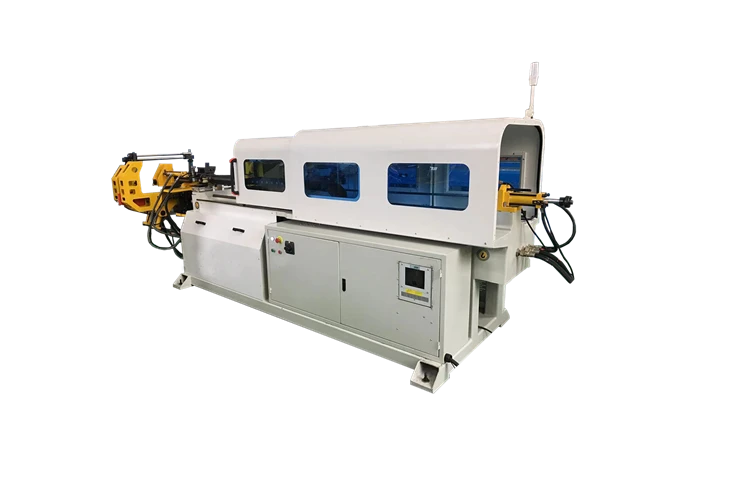
A typical CNC pipe bending machine consists of a frame, a bending head, a clamping mechanism, and a control panel. The pipe to be bent is loaded into the machine, and the operator inputs the bending parameters into the CNC system. These parameters include the bend angle, bend radius, and the number of bends.
The Technology Behind Multi - Radius Bending
Multi - radius bending refers to the ability of a CNC pipe bending machine to create bends with different radii on a single pipe or tube. This is achieved through a combination of advanced software and hardware components.
Software Control
The heart of a CNC pipe bending machine is its software. The CNC software allows the operator to program complex bending sequences with multiple radii. The operator can input the specific radius for each bend, along with the bend angle and the position of the bend on the pipe. The software then calculates the optimal movement of the bending tools to achieve the desired bends.
Modern CNC software also offers simulation capabilities. This means that before the actual bending process begins, the operator can visualize the final bent pipe on the computer screen. This helps to identify any potential issues, such as interference between the pipe and the bending tools, and make adjustments to the program accordingly.
Hardware Adaptability
In addition to software control, the hardware of a CNC pipe bending machine must be designed to accommodate multi - radius bending. The bending head of the machine is equipped with a set of interchangeable bending dies. Each die is designed to create a specific bend radius. When the machine needs to create a bend with a different radius, the appropriate die is automatically selected and installed by the machine.
The clamping mechanism of the machine also plays a crucial role in multi - radius bending. It must be able to securely hold the pipe in place during the bending process, regardless of the bend radius. This ensures that the pipe does not slip or deform during bending, resulting in accurate and consistent bends.
The Process of Multi - Radius Bending
The process of multi - radius bending on a CNC pipe bending machine can be broken down into several steps:
Step 1: Pipe Loading
The first step is to load the pipe or tube into the machine. The pipe is placed in the clamping mechanism, which holds it securely in place.
Step 2: Program Input
The operator then inputs the bending program into the CNC system. This program includes the details of each bend, such as the bend radius, bend angle, and the position of the bend on the pipe.
Step 3: Die Selection
Based on the bending program, the machine automatically selects the appropriate bending die for each bend. The die is then installed on the bending head.
Step 4: Bending Operation
Once the die is installed, the machine begins the bending process. The bending head moves along the pipe, applying pressure to create the bend. The CNC system precisely controls the movement of the bending head and the pressure applied, ensuring that the bend is created with the correct radius and angle.
Step 5: Repeat for Multiple Bends
If there are multiple bends with different radii on the pipe, the machine repeats the die selection and bending process for each bend. The machine can perform these operations in a sequential manner, creating a complex bent pipe with multiple radii.
Benefits of Multi - Radius Bending
Multi - radius bending offers several benefits for various industries:

Design Flexibility
Multi - radius bending allows designers to create more complex and innovative pipe and tube designs. This is particularly useful in industries such as automotive, aerospace, and furniture manufacturing, where unique and intricate designs are often required.
Cost Savings
By being able to create multiple radii on a single pipe, manufacturers can reduce the number of individual pipes and joints required in a project. This not only saves on material costs but also reduces the time and labor required for assembly.
Improved Quality
CNC pipe bending machines offer high precision and repeatability. This means that the bends created with multi - radius bending are consistent and accurate, resulting in a higher - quality final product.
Applications of Multi - Radius Bending
Multi - radius bending has a wide range of applications in various industries:
Automotive Industry
In the automotive industry, multi - radius bending is used to create exhaust systems, roll cages, and other structural components. The ability to create complex bends with different radii allows for more efficient use of space and better performance of the vehicle. For example, an Exhaust Bending Machine can precisely bend exhaust pipes with multiple radii to fit the specific layout of the vehicle.
Aerospace Industry
The aerospace industry requires high - precision components with complex geometries. Multi - radius bending is used to create pipes and tubes for aircraft hydraulic systems, fuel systems, and air conditioning systems. The accuracy and reliability of CNC pipe bending machines ensure that these components meet the strict safety and performance standards of the aerospace industry.
Furniture Manufacturing
In furniture manufacturing, multi - radius bending is used to create unique and stylish frames for chairs, tables, and other furniture pieces. The ability to create bends with different radii allows designers to add curves and contours to the furniture, giving it a more modern and aesthetically pleasing look.
Our CNC Pipe Bending Machines for Multi - Radius Bending
As a supplier of CNC pipe bending machines, we offer a range of machines that are specifically designed for multi - radius bending. Our Fully Automatic Pipe Bending Machine and Fully Automatic Tube Bending Machines CNC are equipped with advanced CNC software and hardware components that enable precise multi - radius bending.
Our machines are easy to operate, with a user - friendly interface that allows operators to quickly program complex bending sequences. They also offer high productivity, with fast bending speeds and short setup times. In addition, our machines are built to last, with high - quality components and a robust design that ensures reliable performance.
Contact Us for Your Multi - Radius Bending Needs
If you are looking for a reliable CNC pipe bending machine for multi - radius bending, we are here to help. Our team of experts can provide you with detailed information about our machines, including their features, specifications, and pricing. We can also offer technical support and training to ensure that you get the most out of your CNC pipe bending machine.
Whether you are a small - scale manufacturer or a large - scale industrial enterprise, we have the right solution for your multi - radius bending needs. Contact us today to start a discussion about your requirements and how our CNC pipe bending machines can help you achieve your goals.
References
- "CNC Pipe Bending Technology: Principles and Applications" by John Smith
- "Advanced Manufacturing Processes in the Pipe and Tube Industry" by Jane Doe
- Industry reports from leading manufacturers of CNC pipe bending machines