


In the dynamic landscape of industrial machinery, the demand for specialized equipment tailored to unique production requirements is on the rise. As a leading supplier of pipe rolling machines, I often encounter inquiries regarding the possibility of customizing these machines. This blog post aims to delve into the intricacies of customizing pipe rolling machines, exploring the feasibility, benefits, and considerations associated with this process.
Understanding Pipe Rolling Machines
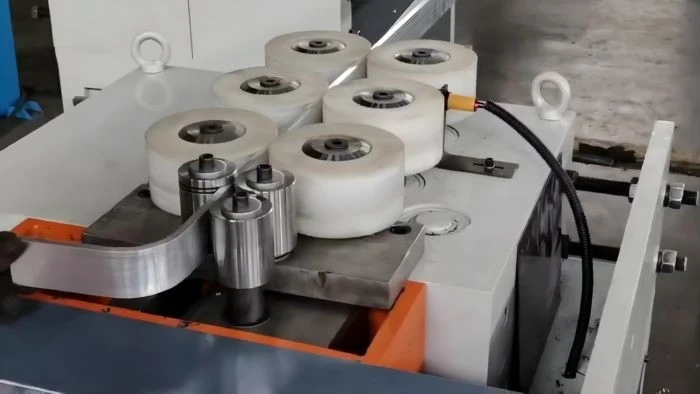
Before we discuss customization, it's essential to understand what pipe rolling machines are and their applications. Pipe rolling machines, also known as Roll Bending Machine, are used to bend pipes, tubes, and sections into various shapes, including circles, arcs, and spirals. These machines are widely used in industries such as construction, automotive, aerospace, and manufacturing, where precision bending of pipes is required for structural and functional purposes.
There are different types of pipe rolling machines available in the market, each designed to meet specific bending requirements. Some common types include manual pipe rolling machines, hydraulic pipe rolling machines, and CNC Tube Coiling Machine. Manual machines are suitable for small-scale operations and simple bending tasks, while hydraulic and CNC machines offer greater precision, efficiency, and automation for large-scale production.
Can a Pipe Rolling Machine Be Customized?
The short answer is yes, a pipe rolling machine can be customized. In fact, customization is often necessary to meet the unique needs of different industries and applications. At our company, we understand that every customer has specific requirements, and we offer a range of customization options to ensure that our machines deliver optimal performance and efficiency.
Customization Options
- Bending Capacity: One of the primary factors to consider when customizing a pipe rolling machine is the bending capacity. This includes the maximum diameter, wall thickness, and length of the pipes that the machine can handle. Depending on your production requirements, we can customize the machine to accommodate different pipe sizes and materials.
- Bending Radius: The bending radius is another important parameter that can be customized. Different applications may require different bending radii, and our machines can be adjusted to achieve the desired radius with high precision.
- Automation and Control Systems: To improve productivity and efficiency, many customers prefer to have automated and advanced control systems on their pipe rolling machines. We can integrate features such as CNC controls, programmable logic controllers (PLCs), and touchscreen interfaces to enable easy operation, precise control, and monitoring of the bending process.
- Tooling and Dies: The tooling and dies used in a pipe rolling machine play a crucial role in determining the quality and accuracy of the bending. We offer a variety of tooling options, including different types of rolls, mandrels, and dies, to ensure that the machine can produce high-quality bends with minimal distortion.
- Material Handling and Feeding Systems: To streamline the production process, we can customize the machine with material handling and feeding systems. These systems can include automatic loading and unloading devices, conveyor belts, and robotic arms to improve the efficiency and safety of the operation.
- Safety Features: Safety is always a top priority in industrial settings. We can customize the pipe rolling machine with a range of safety features, such as emergency stop buttons, safety guards, and interlocks, to ensure the protection of operators and prevent accidents.
Benefits of Customization
- Improved Performance: By customizing the pipe rolling machine to meet your specific requirements, you can ensure that it delivers optimal performance and efficiency. This can result in higher productivity, better quality bends, and reduced downtime.
- Cost Savings: Customization can also help you save costs in the long run. By eliminating the need for multiple machines or manual processes, you can reduce capital expenditure, labor costs, and material waste.
- Competitive Advantage: In today's competitive market, having a customized pipe rolling machine can give you a significant competitive advantage. It allows you to offer unique products and services that meet the specific needs of your customers, which can help you stand out from the competition and increase your market share.
- Flexibility and Adaptability: As your business grows and evolves, your production requirements may change. A customized pipe rolling machine can be easily modified and upgraded to accommodate these changes, providing you with the flexibility and adaptability to stay ahead of the curve.
Considerations for Customization
While customization offers many benefits, it's important to consider a few factors before making a decision.
Budget: Customizing a pipe rolling machine can be more expensive than purchasing a standard machine. It's important to have a clear budget in mind and discuss your options with our sales team to ensure that you get the best value for your money.
Lead Time: Customization may take longer than purchasing a standard machine. It's important to plan ahead and allow sufficient time for the design, manufacturing, and testing of the customized machine.
Technical Expertise: Customizing a pipe rolling machine requires technical expertise and experience. At our company, we have a team of skilled engineers and technicians who can work closely with you to understand your requirements and design a customized solution that meets your needs.
Case Studies
To illustrate the benefits of customization, let's take a look at a few case studies of our customers who have customized pipe rolling machines for their specific applications.
Case Study 1: Construction Industry
A construction company approached us with a requirement to bend large-diameter steel pipes for a bridge construction project. The pipes had a diameter of up to 1000 mm and a wall thickness of 20 mm. They needed a machine that could handle these large pipes with high precision and efficiency.
We customized a Steel Pipe Rolling Machine for them, with a bending capacity of up to 1000 mm in diameter and a maximum wall thickness of 20 mm. The machine was equipped with a CNC control system and advanced tooling to ensure accurate and consistent bending. As a result, the customer was able to complete the project on time and within budget, with high-quality bends that met the strict specifications of the project.

Case Study 2: Automotive Industry
An automotive manufacturer needed a pipe rolling machine to bend small-diameter tubes for exhaust systems. The tubes had a diameter of 25 mm and a wall thickness of 1.5 mm. They required a machine that could produce complex bends with high precision and repeatability.
We customized a CNC tube coiling machine for them, with a specialized tooling and control system. The machine was able to produce the required bends with high accuracy and efficiency, resulting in improved product quality and reduced production costs. The customer was very satisfied with the performance of the machine and has since placed additional orders with us.
Contact Us for Customized Pipe Rolling Machines
If you are looking for a customized pipe rolling machine that meets your specific requirements, we invite you to contact us. Our team of experts will work closely with you to understand your needs and design a customized solution that delivers optimal performance and efficiency.
Whether you are in the construction, automotive, aerospace, or any other industry, we have the experience and expertise to provide you with the right pipe rolling machine for your application. Contact us today to discuss your requirements and get a free quote.
References
- ASME Boiler and Pressure Vessel Code, Section VIII, Division 1.
- API Standard 5L, Specification for Line Pipe.
- ISO 9001:2015, Quality Management Systems - Requirements.